
Wearable Art at Formal Galas: Style the Dress, Jewelry, Hair, and Makeup
Let the bracelet be the statement, not an afterthought. The best wearable art styling tips for formal galas start with the invitation: white tie calls for a full-length ball gown, while a floor-length gown is the classic black-tie choice. Then choose one piece of jewelry to lead. A sculptural cuff or distinctive ring can bring intention to your look without competing with an embellished dress.
Formal dressing asks you to balance polish with personal expression. The right details make that feel natural, whether you wear a simple satin gown or a richly decorated silhouette. This guide shows how to match dress codes and outfit lengths with statement jewelry, bracelets, and rings, then coordinate your hair and makeup around a focal point. You’ll also find ways to make wearable art feel considered and comfortable through an evening of conversation, dining, and dancing. Small choices can carry meaning and come together in a look that feels entirely your own.
Key Takeaways
- Use the invitation’s dress code and event setting to guide your silhouette, fabric, and finishing details.
- Let the dress and jewelry share the spotlight thoughtfully by choosing one focal point and keeping other accents restrained.
- Match your hairstyle and makeup to the neckline, earrings, and overall mood of your outfit.
- Choose bracelets, cuffs, and rings that feel comfortable through the evening, and arrange them so each piece has room to stand out.
1. Gala dress codes and appropriate outfit lengths
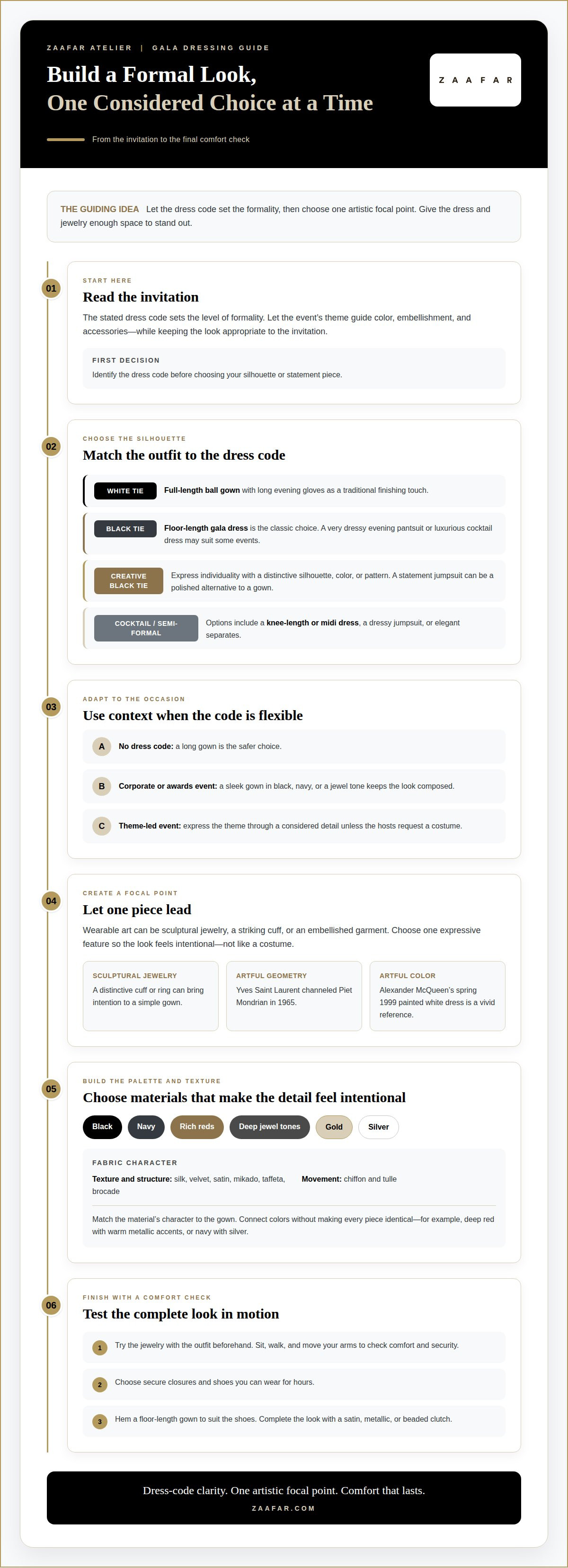
Start with the invitation: its dress code sets the formality, while the event’s theme can guide your color, embellishment, and accessories. White tie calls for a full-length ball gown, with long evening gloves as a traditional finishing touch. For black tie, a floor-length gala dress is the classic choice, though a very dressy evening pantsuit or luxurious cocktail dress may suit some events. These wearable art styling tips for formal galas begin with honoring the stated formality.
Creative black tie leaves room for individuality through distinctive silhouettes, color, and pattern. A statement jumpsuit can be a polished alternative to a gown. Cocktail or semi-formal attire can include a knee-length or midi dress, a dressy jumpsuit, or elegant separates. If an evening gala has no dress code, a long gown is the safer choice. For a corporate or awards event, a sleek gown in black, navy, or a jewel tone keeps the look composed.
What counts as wearable art for a formal gala? It’s an expressive piece worn on the body, such as sculptural jewelry, a striking cuff, or an embellished garment that gives the outfit an artistic focal point. Yves Saint Laurent channeled Piet Mondrian in 1965, showing how bold geometry can inform formal dressing without turning it into costume. Follow the dress code and express a theme through a considered detail, unless hosts request a costume.
For evening color, consider black, navy, rich reds, deep jewel tones, gold, or silver. Silk, velvet, satin, mikado, taffeta, and brocade bring differing textures and structure; chiffon and tulle add movement. Among wearable art styling tips for formal galas, matching the material’s character to the gown helps an expressive accent feel intentional. Alexander McQueen’s spring 1999 painted white dress offers a vivid reference for artful color.
Affordable wearable art can start with a simple outfit and one expressive accessory you already own, such as a distinctive ring or bracelet. To check comfort and security for a long gala, try the piece with your outfit beforehand: sit, walk, and move your arms. Choose secure closures and shoes you can wear for hours, and hem a floor-length gown to suit the shoes. A satin, metallic, or beaded clutch completes the look.
2. Balancing statement jewelry with embellished clothing
Start with the gown’s strongest detail, then choose one main focal point. A beaded bodice already draws the eye, so pair it with refined earrings rather than a bold necklace and stacked bangles. With a clean formal dress, a sculptural necklace or chandelier earrings can make the statement. This contrast gives both the fabric and jewelry room to stand out.
Match the jewelry’s scale to the gown’s surface and neckline. With dense embroidery, choose a simple shape that echoes one detail, such as gold earrings beside gold thread. With smooth fabric, a distinctive necklace can fill an open neckline without adding competing texture. If the invitation calls for creative attire, express that mood through an artful silhouette or accessory, not every element at once.
Use color to connect the pieces without making them identical. Pair a deep red gown with warm metallic accents, or contrast navy with silver. Repeating one color in a ring or clutch creates a visual thread. A statement cocktail ring usually looks more balanced on one hand, especially beside an embellished sleeve.
Finish with accessories that support your focal point. A small satin, metallic, or beaded clutch complements evening attire; choose a quieter finish if your jewelry is ornate. For shoes, prioritize a pair you can wear for hours, such as elegant flats or comfortable heels. Before leaving, check the outfit in motion: sit, walk, and lift your arms to see if your jewelry catches on the fabric.
In the United States, you can find wearable art directly from independent makers, at artisan markets, or in gallery boutiques. To commission a piece, tell the artist about the occasion, gown fabric, preferred colors, and focal point you want. These details help shape something personal that still works harmoniously with your formal outfit.
3. Coordinating hair and makeup with an outfit
Let the neckline guide your hairstyle. An updo reveals a strapless or high-neck dress and gives statement earrings clear space. Soft waves complement an open-back or one-shoulder gown, adding movement without obscuring its shape. With a cocktail dress that has a detailed neckline, sweep your hair away from your face to keep the cut visible. Consider the outfit from the front and back before choosing a style, especially with an open-back design.
Choose one makeup feature to lead: a bold lip or dramatic eyes. With a jewel-toned gown, a complementary lip can add warmth; with prominent earrings, softly defined eyes keep attention near your face without competing. A full-length gown in a classic dark color can work with either choice, depending on the jewelry and overall mood. Keep the rest of your makeup balanced so the artistic detail, not a cluster of competing accents, holds focus.
Gloves affect how your hair and makeup work together. Long evening gloves suit white tie’s tradition, while creative black tie can make them a striking accent. If you wear gloves, consider a sleek updo and restrained eye makeup to keep the line from hand to shoulder uncluttered. With bare arms and chandelier earrings, pinned-back hair can show off the earrings. Try the complete combination before the event.
Finish with details that remain polished through the evening. Apply fragrance 30-60 minutes before arrival, allowing its presence to settle before greetings and close conversation. Choose a manicure that complements one element, such as a muted shade beside gold jewelry or a deep tone with a simple black dress. Check nail length against gloves, closures, and the clutch, then test how each choice feels while moving and handling small items.
4. Bracelets, cuffs, and cocktail rings
At an evening gala, a bracelet or ring can become the most personal detail in your fashion story. Decide whether your wrist or hand will carry the main statement, then keep the other quieter. A wide cuff pairs well with a bare arm and a simple sleeve; a delicate bracelet can add definition beside a long sleeve. If you stack bangles, wear them on one wrist to keep the look intentional rather than crowded.
Consider how each piece moves with the outfit. A cuff should sit securely without pinching, while bangles should move comfortably without catching on fabric. Try the jewelry with the actual sleeve before the event, especially with chiffon or beaded material. Gala events typically span 4-6 hours or more, so comfort matters as much as the first impression. If the outfit has a dramatic necklace, choose a quieter wrist accent to preserve one clear focal point.
A cocktail ring draws attention to your hand during conversation, dining, and a toast. Wear a statement ring on one hand only, leaving the other free of competing pieces. A single bold ring can balance a clean black-tie silhouette; a smaller ring can complement a sculptural cuff. Before the evening, practice holding a glass and using your clutch. You’ll see if the ring catches, shifts, or feels distracting.
For a meaningful wrist accent, the Midline Copper Bracelet - Minimalist Protection Talisman or Jacquard Weave Bracelet can sit within a gala look as a distinct wearable-art detail. Let the bracelet lead, or pair it with a simple necklace rather than another bold accessory. Explore the Midline Copper Bracelet as a considered accent for your next formal event.
For black-tie-optional galas, a floor-length gown is the safest choice. An elegant cocktail dress, midi dress, or tailored evening pantsuit is also acceptable if it feels suitably dressed up for the evening.
ZAAFAR Atelier
ZAAFAR Atelier creates handmade jewelry and Artwear for those seeking a meaningful accent for formal dressing. Its spiritually inspired pieces use a patented technique to combine jewelry with a charm intended to remind the wearer to practice gratitude. For a gala, a bracelet or necklace can add a personal focal point without overwhelming the gown’s silhouette.
The Midline Copper Bracelet - Minimalist Protection Talisman and Jacquard Weave Bracelet are wrist-focused options, while the Festive Royalty Necklace adds presence near the neckline. Choose a piece that complements your outfit’s shape and details, then let it carry its own meaning. Explore ZAAFAR Atelier’s wearable art for an accent that feels connected to your style.
Let Your Gala Look Carry Meaning
As you prepare for your next formal evening, choose a detail that feels connected to you, not just to your dress. That personal point of view turns wearable art styling tips for formal galas into a starting point for a look with lasting meaning. Decide whether you want your statement near the neckline, at the wrist, or in the silhouette itself, then give it room to speak.
ZAAFAR Atelier offers pieces such as the Festive Royalty Necklace, Midline Copper Bracelet - Minimalist Protection Talisman, and Heart Shape Bodysuit. Each brings a distinct artistic presence to formal dressing. Let your choice reflect the mood you want to carry into the room, whether that’s quiet confidence, expressive color, or a reminder to practice gratitude.
If you’re considering a meaningful artwear accent for an upcoming gala, contact ZAAFAR Atelier to begin a conversation. Your style can honor the occasion while remaining unmistakably your own.
Frequently Asked Questions
How can you style wearable art for a black-tie gala?
Anchor your look in black-tie formality, then give wearable art a deliberate place in the outfit. A floor-length gown with a clean bodice can frame an expressive shoulder piece, while an artistic belt can define the waist of a simple silhouette. Before the gala, view the full outfit in natural and evening light to see whether the art stands out against the gown.
How do you balance statement wearable art with formal attire?
Give your statement piece visual space by choosing outfit details that don’t interrupt its shape. For example, wear an artful shoulder adornment with a smooth, uncluttered shoulder line rather than a ruffled sleeve that hides its form. Keep the surrounding colors related or intentionally contrasting, and consider how the piece looks while seated, greeting guests, and moving through the room.
How should you choose jewelry, shoes, and accessories to complement wearable art?
Choose accessories based on where the wearable art sits and what you’ll do at the event. A wrist-focused piece should not snag on a textured bag, while a necklace should sit comfortably with the neckline. Include your chosen shoes and clutch in the final try-on, then walk, sit, and handle the bag. This practical check can reveal distracting movement or awkward overlaps before the evening.